Email Us On : ecct-cancer@getintouch.zohodesk.in

Our Testimonials
A Mother’s Triumph: Beating Cancer During Pregnancy
10 Years Cancer-Free Without Chemotherapy
In 2013, Mrs. Nurhayati faced an unimaginable challenge: she was two months pregnant when she was diagnosed with invasive ductal carcinoma, a highly aggressive form of breast cancer. Her doctors recommended chemotherapy and a hysterectomy to terminate the pregnancy.
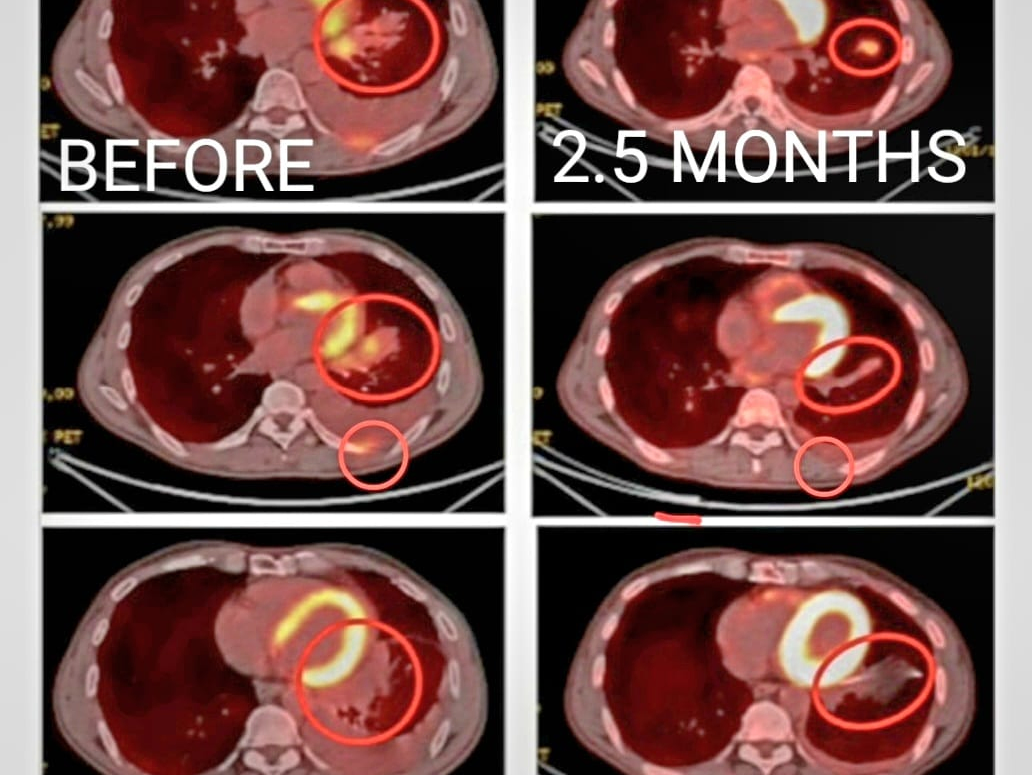
Overcoming the Odds: 12 Years of Survival After Lung Cancer
The Longest-Running ECCT Survivor Story
When all traditional treatment options were exhausted, one lung cancer patient turned to ECCT as a last resort. Following the advice of a pioneering doctor, they embarked on this new therapy, achieving an astonishing 12 years of cancer-free life. Their journey is one of hope, perseverance, and the power of ECCT to bring second chances to those facing the toughest cancers.
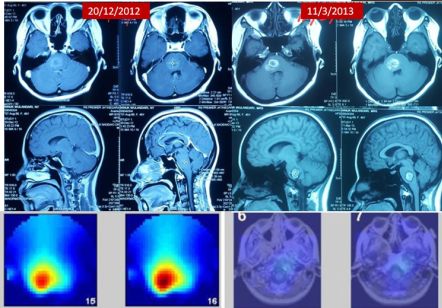
From Hopeless to Healed: Reversing Brainstem Cancer
Walking Again After 2 Months with ECCT
After undergoing multiple Gamma Knife procedures for brainstem cancer, a patient lost the ability to walk or speak. With no other options left, they began ECCT treatment. Within two months, not only were they walking again, but they had also regained full speech. ECCT gave this patient their life back, demonstrating its incredible potential in treating difficult-to-reach cancers.
Beyond the Bedridden Sentence: A Journey from Despair to Devotion
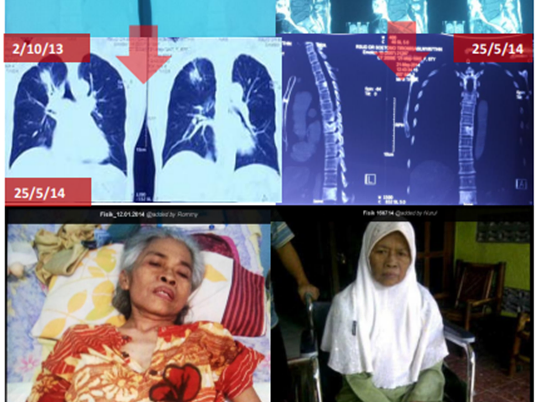
Performing Umrah Just 2 Months After a Terminal Prognosis
In late 2012, Bu Ninuk was diagnosed with inoperable brainstem cancer and given a life expectancy of less than six months. After being sent home from the hospital in a helpless, bedridden state because doctors could no longer offer treatment, her family turned to ECCT (Electro-Capacitive Cancer Therapy) as a final hope. Remarkably, within just one month of using the “cancer helmet,” she regained enough strength to travel to Mecca for the Umrah pilgrimage. Her recovery was so profound that she returned from the trip not in a wheelchair, but walking independently and pushing her own luggage, eventually surpassing the 10-year survival milestone.
A Breath of Life: Reclaiming a Future After a Terminal Diagnosis
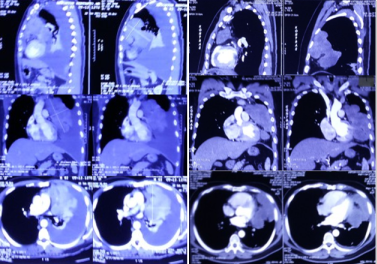
Celebrating a Decade of Survival Following “Untreatable” Lung Cancer
In 2013, after exhausting all conventional options including surgery and intensive chemotherapy, a patient diagnosed with aggressive lung cancer was left with little hope. Faced with a dire prognosis, they turned to ECCT (Electro-Capacitive Cancer Therapy) as a pioneering alternative. Against the odds, the therapy facilitated a remarkable recovery, leading to a cancer-free life that has now spanned over 12 years. This journey serves as a powerful testament to the potential of non-traditional treatments in providing a second chance to those facing the most difficult-to-reach and advanced-stage cancers.
Bridging Borders for a Cure: From Tokyo to Tangerang in Search of Hope
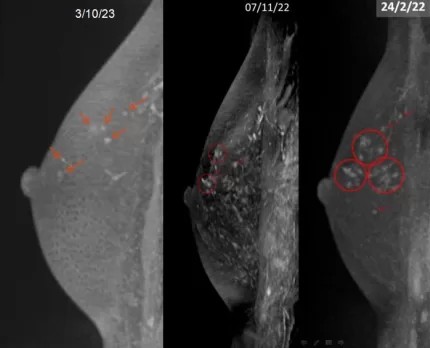
10 Years Cancer-Free Without Surgery or Chemotherapy
In 2014, Sae was diagnosed in Tokyo with Invasive Ductal Carcinoma, a fast-growing and aggressive form of breast cancer. Despite being offered standard treatments like a radical mastectomy and radiation, her doctors warned that her specific cancer type was resistant to these methods and prone to recurrence. Refusing to accept these limited options, Sae and her husband traveled from Japan to Indonesia to seek ECCT (Electro-Capacitive Cancer Therapy). Despite the challenges of a “Type C2” tumor—known for being difficult to treat—her ten-year journey of extraordinary patience and consistent therapy resulted in the tumor mass almost completely disappearing. Today, Sae remains healthy and active, having successfully bypassed the invasive surgeries and toxic treatments she once feared.
Defying the Double Diagnosis: A Mother's Victory Over Metastasis
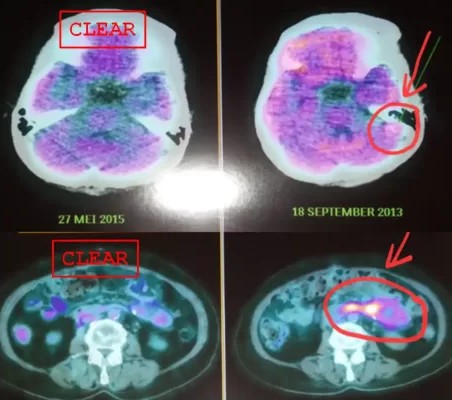
10 Years of Survival After Stomach Cancer Spread to the Brain
In 2013, Mrs. Sioe faced a devastating prognosis: her stomach cancer had recurred after surgery and aggressively metastasized to her brain (cerebellum), leaving her bedridden and unable to complete her chemotherapy. With conventional treatments failing to stop the spread, her son turned to ECCT (Electro-Capacitive Cancer Therapy) as a desperate last resort. The results were rapid and transformative; within just two weeks of using the device, she progressed from being bedridden to walking again. By 2015, PET scans declared her “CLEAR” of cancer, allowing her to live a largely normal life for over a decade, a feat deemed impossible by her initial prognosis.
From Bedridden to Back at Work: A Decade of Living in Harmony with Cancer
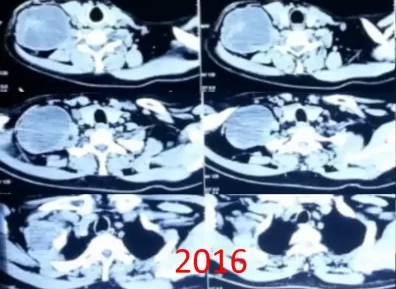
Overcoming a “One Year to Live” Diagnosis Without Surgery
In 2012, Mang Iwan was diagnosed with advanced lymphoma that had spread to his chest and lungs, forcing him to quit his job and threatening his ability to provide for his family. After exhausting all medical and alternative treatments, his doctor gave him a grim prognosis of less than one year to live. In a desperate state where he could not even sit up without pain, he began ECCT (Electro-Capacitive Cancer Therapy) in 2016. The results were life-altering: within two weeks, he could sleep soundly again, and within a month, he returned to work at his workshop. Ten years later, while not medically “cured” in the traditional sense, he lives in harmony with a softened, inactive tumor, enjoying good health and a regained quality of life that defies his initial expiration date.
The Patient Told to "Choose a Burial Place" Now Lives to Tell the Tale
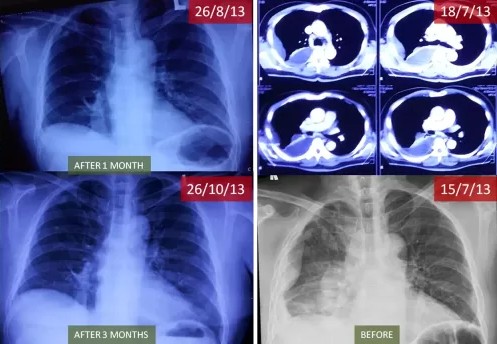
10 Years of Survival After a Terminal Lung Cancer Diagnosis
In July 2013, Pak Ichwan was diagnosed with advanced lung cancer that had attached to his ribs and caused fluid buildup, leaving him in severe pain and short of breath. With no viable medical options left, hospital staff advised his family to prepare for the worst and “choose a burial place,” signaling the end of his journey. Refusing to give up, his family discovered ECCT as a final hope. The results were swift; within one month of use, the fluid in his lungs disappeared, and after three months, the tumor mass had deflated into a stable scar. Ten years later, Pak Ichwan remains healthy and has even remarried, living a full life long after his original prognosis expired.
The Pioneer’s Gamble: From "Guinea Pig" to a Decade of Survival

10 Years Free from Stage 4 Breast Cancer as the First-Ever ECCT User
In 2010, Suwarni was diagnosed with Stage 4 invasive ductal carcinoma and given a grim prognosis of 1-2 years to live if she refused the recommended chemotherapy and surgery—options she could not afford and feared. Desperate and out of time, she made the courageous decision to become the first human volunteer for Dr. Warsito’s then-experimental ECCT device. Taking a leap of faith into the unknown with a prototype “cancer corset,” the results were immediate and historic; her pain vanished within a month, and the aggressive tumor progressively shrank. Today, she stands as the original testament to the technology, living cancer-free for over a decade and proving that her risk to try the unproven saved her life.
The Miracle Beyond Science: Walking and Seeing After a Decade of Darkness
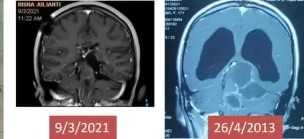
Overcoming an “Inoperable” Brainstem Tumor Without Surgery
Ten years ago, Mrs. Risna was diagnosed with a complex 6 cm tumor pressing on her brainstem, rendering her paralyzed and blind. Her condition was deemed “inoperable” and unresponsive to standard treatments, including early ECCT protocols, due to a protective membrane surrounding the lesion (classified as an “Error Type” case). With no other options, she persisted with ECCT for over a decade, relying on faith and the device’s evolving technology to slowly penetrate the tumor’s defenses. Against all scientific odds, she has regained her ability to walk independently, cross streets safely, and see well enough to return to work, proving that even the most “impossible” cases can find a path to recovery.
A Father’s Nightmare Turned Miracle: Surviving a "6-Month" Death Sentence
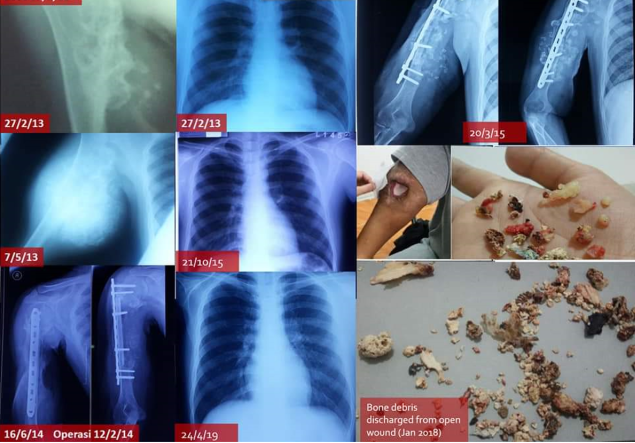
Defying a Terminal Diagnosis: 12 Years Cancer-Free After Osteosarcoma
In 2012, teenager Arbi was diagnosed with aggressive Osteosarcoma in his right arm and given a terrifying prognosis of only six months to live—a grim echo of his mother’s death from cancer years prior. Facing a recommendation for radical amputation up to the shoulder to prevent fatal metastasis, his father turned to ECCT (Electro-Capacitive Cancer Therapy) as a final hope to save his son. The therapy successfully contained the cancer, preventing it from spreading to his lungs or brain while causing the primary tumor to necrotize and exit his body. Although Arbi eventually chose to amputate the damaged arm five years later, the treatment saved his life; today, he is a healthy, active employee at PINDAD, having survived more than 12 years beyond his expiration date.
The "First Case" Phenomenon: Turning an Inoperable Crisis into a Cure
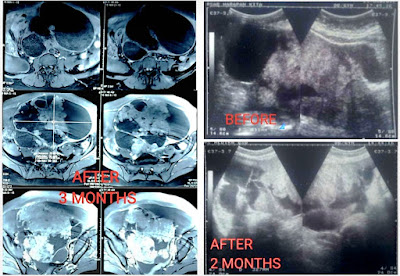
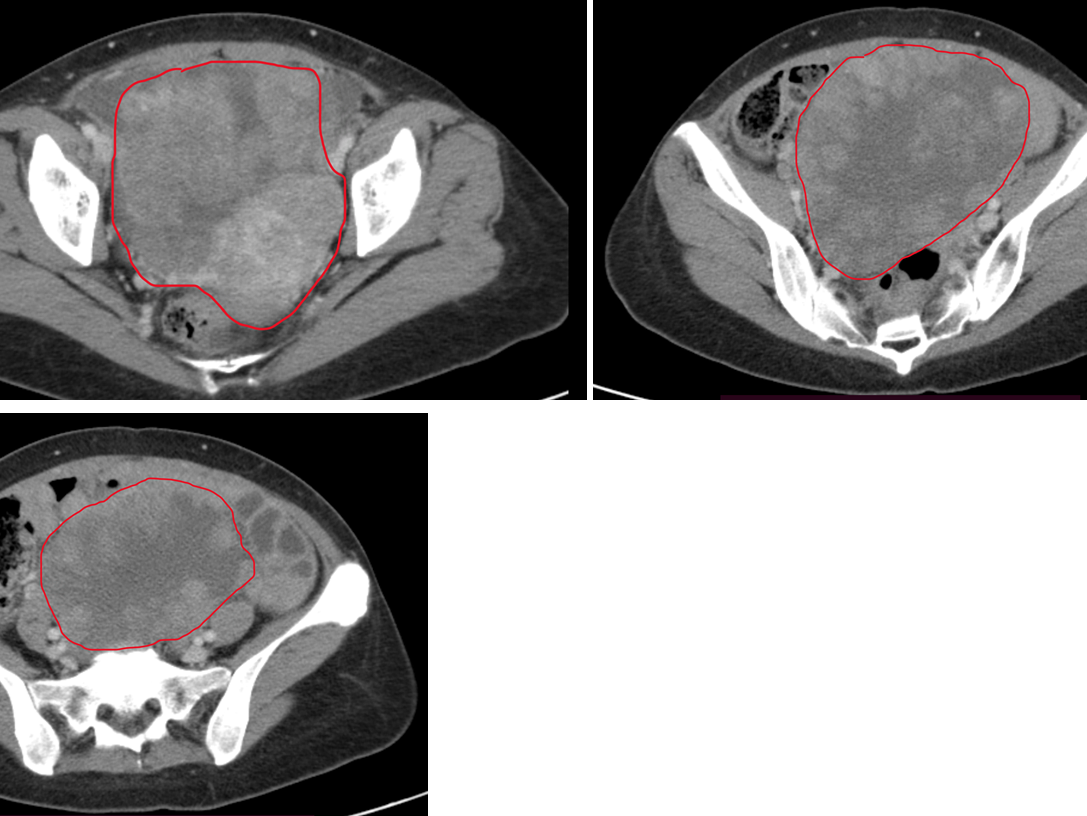
Stage 4 Ovarian Cancer Survivor of 11 Years Without Chemotherapy
In 2012, Mrs. Ida presented with an abdomen resembling a five-month pregnancy and was diagnosed with advanced Ovarian Cancer. The tumor was initially declared inoperable due to dangerous adhesions to her intestines and vital organs, with markers indicating high malignancy. With surgery ruled out, she became the “first case” of her kind to try ECCT to loosen the adhesions. After three months of intensive use, the device successfully liquefied the solid mass and detached it from her organs, allowing for a clean surgical removal. Post-surgery, she continued ECCT as a preventive measure instead of chemotherapy, and 11 years later, she remains cancer-free, active, and healthy.
The Pioneer Patient: 12 Years of Defying Deadly Lung Cancer
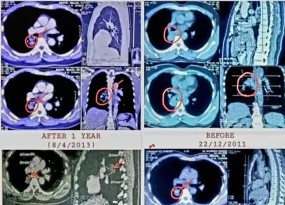
The First Lung Cancer Survivor to Use ECCT on a Doctor’s Advice
In late 2011, Mr. Abdulmalik was diagnosed with advanced Stage 3-4 Adenocarcinoma Lung Cancer, a condition where over 80% of patients typically do not survive past five years. His pulmonologist, recognizing that conventional chemotherapy would offer little benefit against the significant side effects, became the first physician to boldly recommend the then-experimental ECCT (Electro-Capacitive Cancer Therapy). Mr. Abdulmalik agreed to be the first lung cancer patient to test the device. The results were historic: within one month, his bloody coughs ceased and the tumor mass shrank by half. Over a decade later, he remains healthy and active in his 60s, having turned a 2.5-year life expectancy into more than 12 years of survival.
Defying the "Silent Killer": A Miracle Down Under
The Longest-Surviving Stage 4 Pancreatic Cancer Patient in Australia
In 2014, Mr. Budi Santoso, an Australian citizen, was diagnosed with Stage 4 pancreatic cancer that had metastasized extensively to his liver—a condition with a notoriously grim prognosis and few effective medical options. Facing this lethal diagnosis, he traveled to Indonesia to use ECCT (Electro-Capacitive Cancer Therapy) as a pioneering patient for this specific type of cancer. The treatment involved wearing a specialized abdominal corset, which over time halted the spread of the disease and eliminated his pain. Ten years later, at 80 years old, he has been officially recognized by an Australian cancer organization as the country’s longest-surviving Stage 4 pancreatic cancer patient, living an active life of hiking and mountain climbing, free from the disease that was supposed to take his life.
Deep in the Nerve Center: Defying an Inoperable Death Sentence
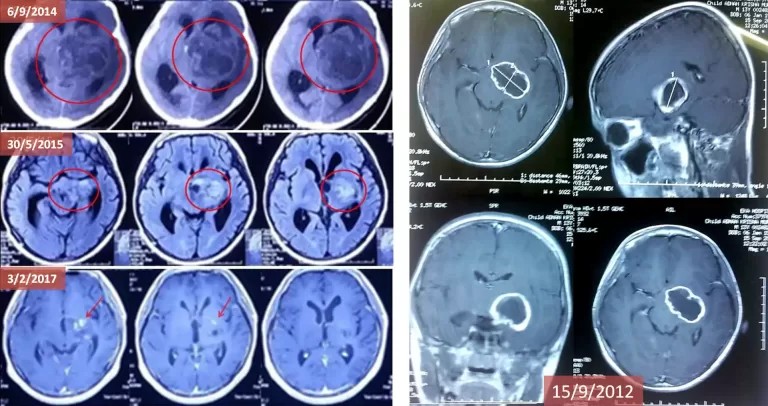
Surpassing a Decade of Survival Without Surgery or Chemotherapy
In 2012, 12-year-old Adnan was diagnosed with a malignant tumor in the basal ganglia—the brain’s critical coordination center. The tumor pressed against the mesencephalon, causing severe headaches and loss of vision, hearing, and motor skills. Due to its perilous location, doctors deemed the cancer inoperable, as surgery or radiation would risk fatal nerve damage. With no other options, his father turned to ECCT. Although he experienced a setback after stopping treatment prematurely, re-commencing with a redesigned helmet successfully shrank the massive 10cm tumor and reduced his hydrocephalus. Ten years later, Adnan remains healthy and pain-free, communicating via technology and living a life that was once considered impossible.
Recovering a Stolen Childhood: Defeating an Inoperable Brain Tumor
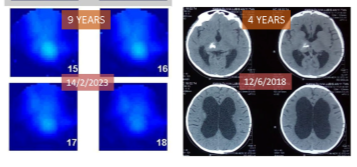
10 Years of Survival with Thalamic Cancer Without Surgery
In 2014, at just 8 years old, Kania was diagnosed with an inoperable low-grade glioma in the thalamus—the brain’s vital nerve center. The tumor caused severe hydrocephalus, seizures, and loss of motor function, but surgery was deemed impossible due to the high risk of damaging critical brain tissue. After rejecting invasive fluid drainage procedures, her family turned to ECCT in 2016. Despite the slow-growing nature of the tumor making it difficult to treat, the therapy successfully halted its progression and reduced the mass over time. Now 18 years old, Kania has defied her prognosis, returning to regular school and becoming a memorizer of the Qur’an, living proof that hope can be found even when medical options run out.
The Miracle of the Vanishing Tumor: Clear in Just 3 Months
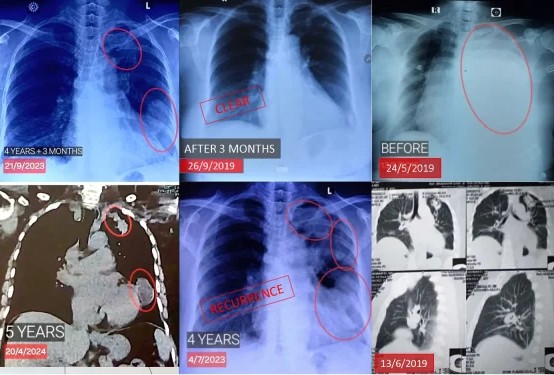
Beating Adenocarcinoma Twice Without Chemotherapy or Biopsy
In 2017, Bu Soewarti was diagnosed with lung cancer marked by a 4cm tumor and severe coughing of blood. Fearing the side effects of conventional medicine and her advanced age, she refused chemotherapy and biopsy, opting instead for ECCT (Electro-Capacitive Cancer Therapy). The response was unprecedented: within just three months of wearing the device, the tumor mass completely disappeared on CT scans, and she stopped treatment. Although the cancer reactivated four years later following a vaccination and years of inactivity, resuming the device quickly brought her condition back under control, allowing her to survive well beyond the initial 5% survival rate for her condition.
Preserving Womanhood: A Decade of Remission Without Mastectomy
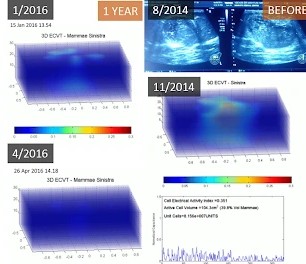
10 Years Cancer-Free After Refusing Radical Surgery for a Large Tumor
In 2013, Mrs. Sri Wahyuni was diagnosed with a large 4cm Intraductal Carcinoma (breast cancer) and was told by multiple oncologists that a full mastectomy was her only option—a procedure she adamantly refused. Determined to save her breast, she turned to ECCT. Although the therapy could not fully dissolve her specific tumor type (Type D), it stabilized the mass enough to eventually allow for a minor lumpectomy instead of total removal. Despite a later scare with lung metastasis, continued use of the device successfully cleared the spread. Today, she celebrates over 10 years of health and remission, having successfully fought for a treatment path that respected her body and her choices.
Saving the Voice: Surviving Stage 4 Tongue Cancer Without the Scalpel
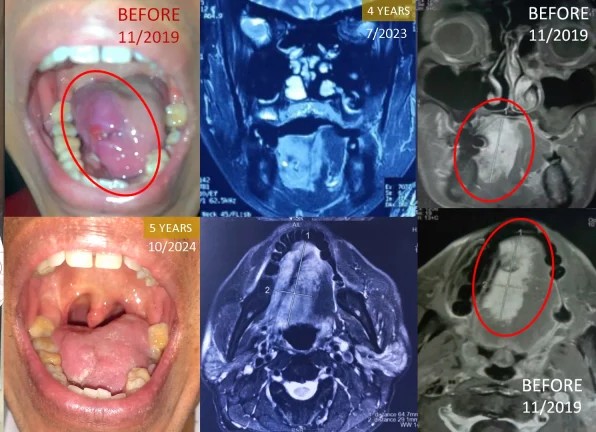
5 Years of Cancer-Free Survival While Keeping the Tongue Intact
In 2019, Mr. Taufik Sarmin was diagnosed with Stage 4 Adenoid Cystic Carcinoma, a rare and painful form of tongue cancer. The tumor was massive, covering nearly the entire right side of his tongue. Faced with the medical recommendation of a glossectomy (surgical removal of the tongue)—which would permanently impair his ability to speak and eat—he chose ECCT as an alternative. The treatment process was grueling and painful as the cancer cells broke down into a thick liquid, but he persisted. Five years later, his tongue remains fully intact and functional. The dense tumor mass has been replaced by scar tissue, allowing him to live a healthy, active life with his speech and sense of taste preserved.
Taming the Unstoppable Mass: Turning the Tide on Chemo-Resistant Cancer
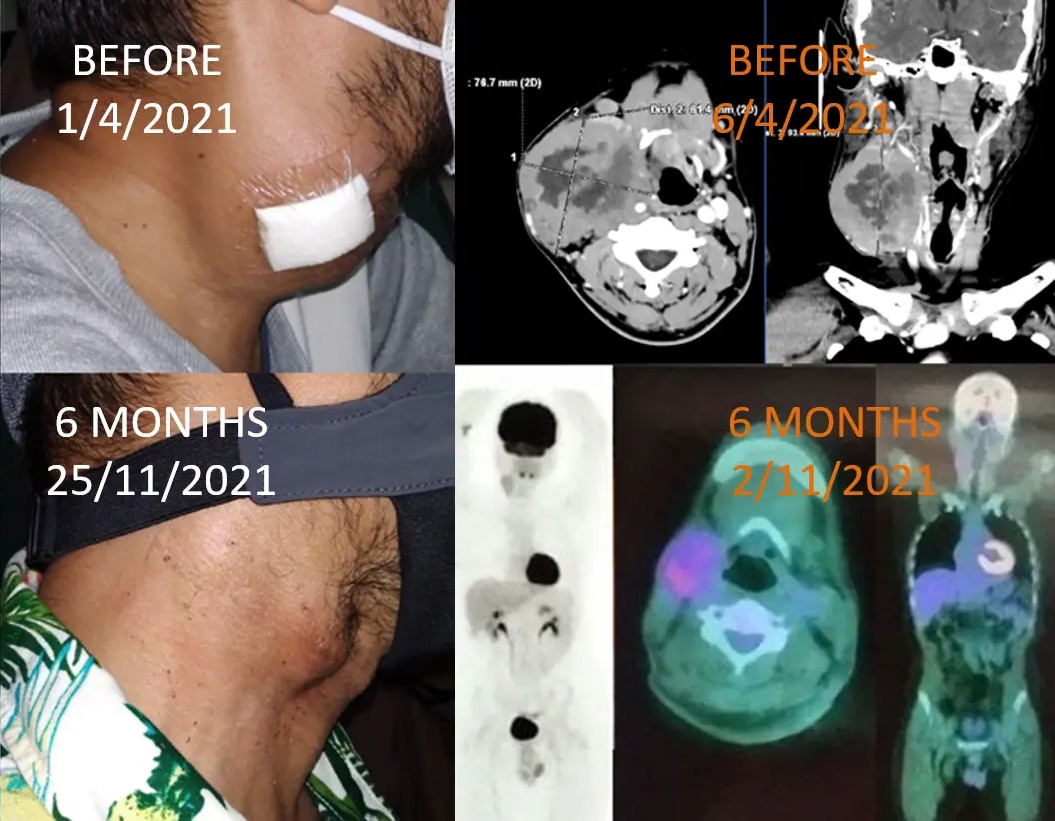
5 Years Cancer-Free After ECCT Potentiated Chemotherapy
In early 2021, Mr. Roni was diagnosed with aggressive neuroendocrine cancer (Diffuse Non-Hodgkin’s Lymphoma) presenting as a massive 10cm tumor in his neck that compressed major blood vessels. Despite enduring six cycles of initial chemotherapy, the tumor not only failed to shrink but continued to grow, causing severe swallowing difficulties and nightly chills. Facing a critical situation where surgery was too risky, he added ECCT to his regimen on the advice of a consultant. The effect was immediate and dramatic: after using the device for two months, the tumor sensitized to the treatment and shrank rapidly after just one subsequent chemo cycle. He continued with ECCT alone to clear the remaining mass, and today, he has surpassed the 5-year survival mark with no signs of the disease.
Growing Up Cancer-Free: A 7-Year-Old’s Victory Over Neck Cancer
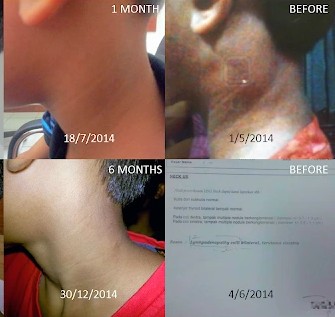
Avoiding Chemo and Surgery to Reach College 10 Years Later
In 2014, 7-year-old Ghozi was diagnosed with a rapidly growing mass in his neck, initially suspected to be Lymphoma but later identified as likely Nasopharyngeal Cancer due to its spread. Located dangerously close to the main blood vessels (carotid artery and jugular vein), the tumor was deemed too risky for biopsy or surgery. His parents opted for ECCT to avoid invasive procedures. The treatment proved highly effective; as he used the device, the lump began to deflate and was expelled through natural bodily discharges. Within one year, the mass was no longer visible, and after three years of preventive use, he remained cancer-free with normal growth. Now, over 10 years later, Ghozi is a healthy, active college student, having beaten the disease without a single session of chemotherapy.